Chess Sale


Credit Card Services


Chess KnowledgeBase
Free Chess Articles

Chess Game Articles

ChessCentral continues to bring depth and variety to its on-line chess game article collection, and is committed to expanding this page regularly with high-quality chess game articles for your enjoyment. Articles (some really, mini e-books!), teaching material, little-known matches, repertoire files, and more will be found here - all free.

If you wish to see our expanded collection, join our Free Member's Area where you will find information on the game of chess, enough to feed the passion!

Chess Software Information

Chess Software Buying Guides
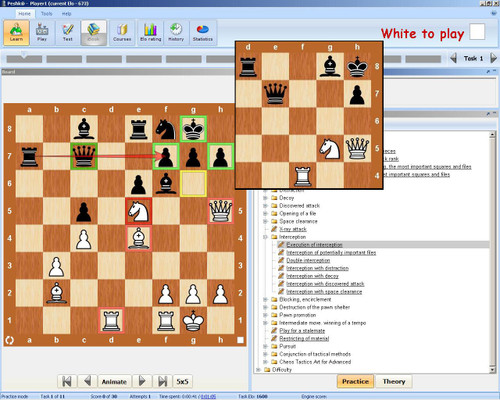
Steve Lopez, ChessBase columnist, shares with you his  "training course" which will gives you pointers on which chess software training tools to use and will also help you improve your game. A must read for everyone who wants to buy chess software and is not sure which chess software program is best for them.

1. Chess Playing Software
2. Chess Tactics Software
3. Positional Chess Software
4. Chess Endgame Software
5. Chess Openings Software
6. Chess Advice

A Short Guide to Convekta Software
Convekta has a number of different types of chess software available. Broadly speaking, these offerings fall into one of several categories: database/playing, exercise collections/tutorials, and reference works. Just about any class of player will find something to like.

Rybka 3 Chess Playing Software; In-Depth Report
The chess engine everybody's been talking about - Rybka - is now part of the Fritz "family" of playing programs. The ChessBase-distributed version of Rybka 3 comes in the familiar "wrapper" of the Fritz family (the ChessProgram11 GUI), so it shares the features of the Fritz interface, including playing and analysis modes. But Rybka possesses several twists all its own, and we'll be exploring these in this special series of 5 articles.

Learn Chess - Play Chess Better

Chess Is Cool for Kids!
What many parents are beginning to learn is that chess can and does help foster developmental thinking in children. As a chess coach, I have seen that chess does more, much more. Kids begin to develop logical thinking, critical thinking, decision making, problem solving, as well as, mathematical skills, algebra and geometry.

5 Easy Ways to Improve your Chess
Every chess player has the potential to improve, even if we don't get good enough to earn the right to place some coveted abbreviation in front of our names. Best of all, it's not all that tough to get better at this game; even though chess' learning curve does become steeper the farther we progress.

Learn from your Chess Games
Playing blitz is not necessarily bad for your game, and can be a useful tool in improving your "board sight" and tactical prowess, as well as getting you comfortable in an opening you might be trying to study. Can you learn from Blitz chess?

Rules of Chess to Rule the Chess Board!
ChessCentral is where you can learn the official chess rule. Learning the chess game rules can lead to a better enjoyment of your chess game. You will find all the chess rules here so that you can begin to play the game and rule the board!

What Chess Playing Equipment can do for You
The single biggest thing which can hold you back as a chess player is the lack of playing opportunities. To become a better chess player we each need to play as much chess as we can, and we need to receive feedback on how we're doing as players. But what can you do if you want to play or study and no one at your chess playing skill level or above is available? Here is your answer!

Chess Game Daily Tips
Chess game principles will help you develop a winning chess game. Every day a new chess game principle will be given as well as the chess game principles that follow. Print them out! Keep these chess game principles by your side as you play chess. You will quickly improve your chess game by taking these chess game principles to heart!!

Play Chess - Tips for Winning Chess Strategy
Know the rules of chess? Understand how the pieces move? Then it's time for you to take a look at these ten tips to help you learn some simple ways to win more games.

The Relative Value of Chess Pieces and The Principles of Chess Play
World Champion Wilhelm Steinitz discusses one of the most important exigencies in the conduct of the chess game. Taken from The Collected Works of Wilhelm Steinitz, you will learn how to judge the relative value of the chess pieces as well as general principles for the guidance of play in all parts of the chess game.

Chess Moves for Chess Improvement
Chess Moves for Chess Improvement is written by acclaimed author Bill Wall. Bill earlier put together a list of Chess Principles that visitors to our Beginner's Area have found to be a great source of advice for quick chess improvement and what chess moves to make. Now Bill has enlarged and expanded each Chess Principle with savvy "how-to" tips and tricks for your chess moves, so you can achieve success in chess and improve quickly and easily

Checkmate in the Game of Chess
Chess is known to be one of the oldest games in the world. Played by Kings, Emperors and Potentates, it has remained popular down through the ages and is still called the "Royal Game". Chess came to Europe from Persia, and took its name from Schach or Shah, which in that language signifies King, and Matt (or "dead") from the Arabic language. Combined they are Schach Matt, or "the King is dead", which is the derivation of our "Checkmate". Here you will see see some famous and tricky checkmates that perhaps you can pull on your opponents.

Which is more important - The Strategy or the Tactics in Chess Training?
Which is more important, the strategy or the tactics? As it is well known, the strategy provides an answer to the question "What to do?" and the tactics provides an answer to the question "How to do it?" A chess player seeks answers to both these questions during the whole chess game.

Modern Methods for Training in Chess
Special preparation of chess players is being modified nowadays due to additional opportunities that could not be realized previously due to technological restrictions.

Chess is a Great Value
An often overlooked facet of chess history is the close link between the royal game's relative popularity and economics. Although not frequently mentioned, there is a fact which generally holds true: chess becomes very popular during tough economic times because of its great value not only as an entertaining game but as a skill builder.

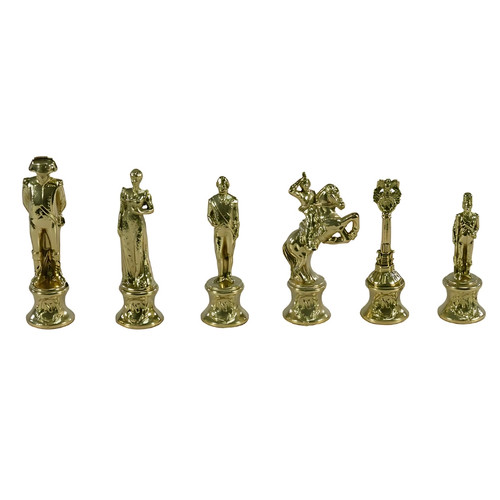
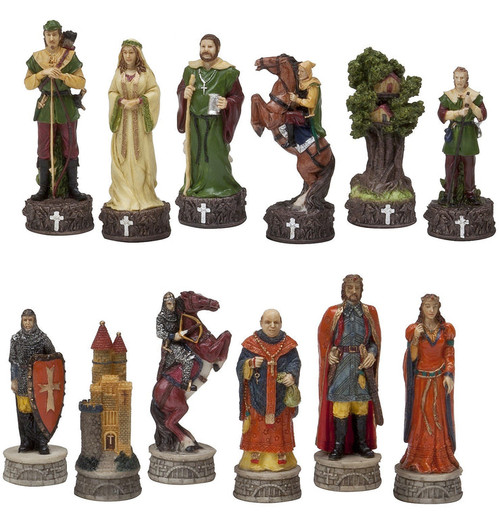
Chess Sets, Chess Pieces, Chess Boards

How to Buy the Right Chess Set: Get the Pieces and Board for You!
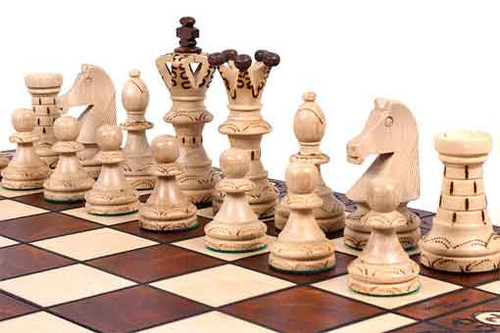
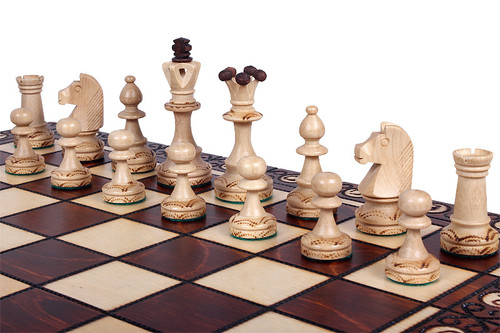
There are so many choices on the market today. How do you buy a chess set (pieces and board) that will meet your needs? Which type of set are you looking for - decorative, practical or both? ChessCentral has put together the following information to help you in your buying decision. A chess set and board should reflect your personal style and taste, as well as fit your budget.

Chess Sets for Chess Tournaments
If you're playing a friendly game of chess at home, against a family member or friend, then any chess set whatever is good enough. The two players must only agree on the chess set to use and then play may begin. If you plan to enter an official chess tournament, however, then certain rules apply regarding the equipment, especially the chess set, to be used.

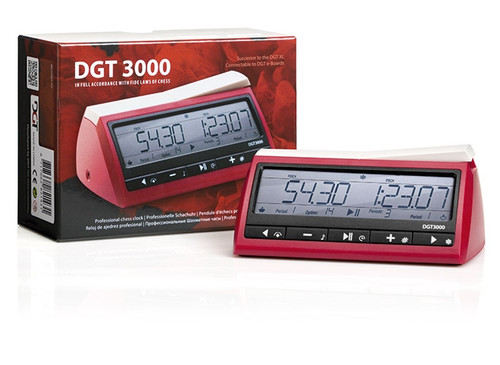
How to Use a Chess Clock
Beginning chess players, and those unfamiliar with chess playing software, are often unsure of the reasons why a chess clock is used or how to operate one. Even experienced players who've never played at a chess club or in a tournament become confused when these topics come up.

Chess Sets and Chess Pieces
Learn the history of chess and chess game pieces. Bill Wall takes you on a journey through time and space from the origins of the game of chess, to the modern chess pieces you may use in your own home. Fascinating stuff!

Chess Sets, Pieces, Boards - The Wood
Are black pieces preferable to rosewood? Not really, it is a matter of personal choice. Both are used in tournament play. Black wood chess sets are more common than rosewood sets, but they are generally less expensive (except, of course, for ebony pieces). Rosewood is an excellent wood for chessmen; it is very resilient and does not chip very easily.

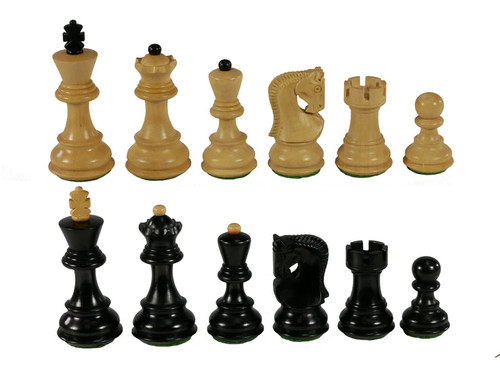
The Staunton Chess Pieces
The Staunton chess pieces are the standard pattern for chess sets used in all world chess federations and United States Chess Federation events.

Chess Teaching Tools for Coaches, Schools, and Clubs

Basics of Chess Databases
This ChessCentral article will give you the basic information you need to understand databases, copying games, and distributing chess lessons in database form.

Creating Flash Cards for Training in Chess
Teaching chess to young students can be a challenging and rewarding experience. Much of the challenge lies in the area of keeping a student's interest; flash cards and making a game out of a chess game can be the answer.

Creating ChessBase Training Positions
Cheess computer software has become more than a convenience to chess coaches over the last several years -- it's become invaluable. These electronic tools allow teachers to create and deliver lessons and training to their students using a variety of media.

Computers and Chess Analysis

Casual games in Fritz12
Fritz12 offers a variety of specialized playing modes such as Rated Game, Friend, and Sparring. But what do you do when you just want a plain vanilla game at, say, ten seconds a move? This article will show you how to set up those "casual" playing modes.

Making ChessBase ready for Rybka
Every registered user of ChessBase is welcome to run free upgrades for his program online. The newest upgrade is available right from within ChessBase 10 through menu Help – Query Upgrade. See how to make your upgraded ChessBase use Rybka as its default engine.

"Modular" Chess Engines and What They'll Do for You
Owning (and using!) an assortment of chess programs is often very useful because different programs usually play in different ways. Additionally, various programs might have useful features which differed from each other.

How To Make Fritz Chess Software Play a Specific Chess Opening
Two frequently-asked questions regarding Fritz (and its "sister" programs which share the same interface: Rybka, Hiarcs, Junior, etc.) are closely related: Can I make Fritz play from a specific position? Can I make Fritz play a specific opening?

Chess Engine Management in Fritz
Computer chess aficionados collect chess engines the way Malcolm Forbes collected toy soldiers. There are a lot of benefits to doing so; different programmers bring a variety of things with them to the proverbial table, and the cornucopia of available chess engines runs the gamut of playing styles from the wildly sacrificial to solidly defensive.

Game Analysis Using ChessBase Engines
(Part One)
In this series of articles Steve Lopez gives you specific step-by-step instructions on how to use chess engines within the ChessBase Chess Program interface (used by Fritz, Hiarcs, Junior, Shredder, etc.). The principles he discusses apply to any chess playing program which has the ability to analyze games. In the first article he explores the basics of setting up and using game analysis features, mainly the "Full Analysis" feature in the ChessBase-produced playing program interface. The second article Steve will discuss using the same interface's "Blundercheck" feature which also provides complete game analysis with the output appearing in a somewhat more complex (but also more useful) form. In the final article, he'll talk about the practical application of a chess program's feedback, e.g. how to use this information to help you improve your own playing skills.

Game Analysis using ChessBase Engines
(Part 2)

Game Analysis using ChessBase Engines
(Part 3)

In this piece, the final installment of a three article series, we're going to look at how you'll use a chess engine to help you improve at chess. This won't be a software tutorial per se; we won't be looking at "click on x to make y happen" instructions, since we covered those in the previous two articles. We'll instead be examining how you'll use the output generated by game analysis features to help you improve your chess.

Chess Engine Tricks
In this article we're going to look at the various Fritz engine displays, how to understand what the program is telling us. We'll learn a few tips and tricks, if you will, for using chess engines in both the ChessBase and "Fritz family" interfaces.

High Performance Analysis with Chess Engines
ChessBase 9 comes complete with a couple of chess engines ready for your use (Fritz5.32 and Crafty). Of course, you can install and use other Winboard- and UCI-compatible chess engines (as described in an article when you purchase Chessbase 9.0). But a question remains: how do you actually use these engines in ChessBase?

Kasparov vs. Fritz
Garry Kasparov the world's highest rated chess player (2830) took on X3D Fritz (2807) in total virtual reality, with the chessboard floating in the air between man and computer. Kasparov neither touched nor moved the pieces as the voice activated X3D Fritz worked its magic to create the ultimate 3D experience. Check out the chess games and see who rules - Man vs. Machine

Chess Database Installation
In this article, we will present a very quick, basic look at the terms use in computer chess and show how these concepts relate to storing a database on your hard drive.

Better is...
Steve Lopez started looking through his collection of chess literature (well over 500 books and CDs) for the first time in a long time and found that he was really seeing them with fresh eyes. And, after perusing the third or fourth volume, steam shot out of his ears and his head started spinning around faster than Linda Blair's at a Black Mass. Read why Steve is ranting, and get ready to laugh - but for your monitor's sake make sure you're not drinking coffee!.

Chess Games

Steinitz Annotates!
The following game is from the final section of the London Chess Club Handicap Tournament. The only "odds" involved are that Zukertort had to play Black, but that was enough for De Vere to take down his famous opponent. Note the excellent concluding combination! Learn more about First World Chess Champion William (Wilhelm) Steinitz

Dr. Ron Plays the Bird!
Find out how one player improved his results and started having FUN at chess. How? He discarded the King's pawn opening and took up 1.f4, Bird's Opening! It turns out that many lines of this "irregular" opening offer built-in attacking prospects that suit the style of aggressive players. Here you'll discover many reasons why you too may want to take up this interesting debut. For more information about the Big Bird PowerBase (3rd Edition) Click here

City of Vienna - City of Paris Correspondence Chess Game, 1884-1885
(Annotated by Wilhelm Steinitz). The following game is one of two annotated by Wilhelm Steinitz in the January 1886 issue of the International Chess Magazine. Here we may see Steinitz at work as a chess journalist, facing deadlines and other pressures - yet observe the care and thoroughness taken with his analysis. Both games are given in ChessBase format for download on the web page given in The Collected Works of Wilhelm Steinitz CD, for which complete details may be found there.

Discart- Bonetti Chess Game Match, 1863
Here is your chance to experience chess as it used to be - or might have been! In January of 1863 a match took place between Francesco Discart and Cornelio Bonetti, using the old Italian rules of chess. Castling was "free" style, en passant pawn captures were disallowed, and a pawn could only be promoted to those pieces already captured! All 15 games of this great match are annotated by Discart himself, and much additional material is included.

You can own a high-quality "mini" e-book of this match in interactive ChessBase format, complete with text documents, keys, links and images. Click here to learn more

Wilhelm Steinitz-Zukertort Chess Game Match, 1886
This is a sample of how Wilhelm Steinitz covered the First World Championship and is presented for your enjoyment from The Collected Works of Wilhelm Steinitz. The Introduction to the Steinitz-Zukertort match will give you a taste of the excitement in the atmosphere at the beginning of the first world championship match. The game itself is richly annotated by Steinitz and shows why he is considered the world's greatest chess instructor. This extract features just one of hundreds of games (850+) annotated by the man who was the idol of Bobby Fischer and revolutionized chess into what it is today. Check out The Collected Works of Wilhelm Steinitz

Fischer Random in 1875
Even Bobby’s "Fischer Random" is not without precedent in standard chess. It is well known that Fischer is a great admirer of Wilhelm Steinitz, and has studied extensively the 1st World Chess Champion’s games and writings. As a teenager Fischer was seen reading the International Chess Magazine, while as recently as 1996 he was observed buying a collection of Steinitz games (The Games of Wilhelm Steinitz) from a chess shop in Argentina. See one of the first know "Fischer Random" games player.

Jose Capablanca - David Janowski, 1918
Here you will see World Champion Jose Capablanca play and discuss an important tournament chess game he fought against David Janowski. If you like this, you will love The Chess Machine!

Playing the Playbook
White is an International Master and a skilled attacker. He is a much stronger blitz player than Tim Sawyer our fearless author. Here he is playing one of his many online simultaneous exhibitions. See how the Alekhine's Defense (a 1.e4 opening) is played. Get your own Playbook

A Famous Loser
Which game of chess is the most famous? Among the millions played and recorded, which single game is so distinguished? Perhaps it is the short offhand game played in 1851 at Simpson’s on the Strand, in London, between Anderssen and Kieseritzky. Within 5 years of its conclusion this contest was known everywhere as the "Immortal" game.

Read an Excerpt from Art of War
Although Sun Tzu's Art of War was written more than 2,600 years ago, it stands today as the pre-eminent work on military strategy, the most brilliant exposition of armed conflict ever composed. This profound manual was penned in the age of chariots and spears, yet generals and field commanders have relied upon its wisdom throughout the ages.

Chess Best Sellers
New Chess Products

FREE
Chess Software
USA Tech Support
for
ChessCentral Customers


Chess Articles


Chess Downloads